SHELLEY WU, PhD
Mind-Body
Wellness Coach
Registered Yoga Teacher E-RYT500
Yoga Benefits Physical and Mental Health
Hatha yoga benefits our mind and emotions on many levels and in many aspects.
1.
Asanas Strengthen the Body
This is important because, after all, the body is a temple for the spirit.
Physical health and mental health often go hand-in-hand. Yoga postures
have been perfected through thousands of years of experience and experiments
by the yogis. They are different from other forms of exercise both technically
and philosophically. They build the body from within, starting from proper
alignment of the inner structure of the bones and the healthy state of
the inner organs. They tone the outer muscles of the body, like athletic
training. But more importantly, they also condition the deeper muscles
that maintain the structure of the body.
2.
Yoga Postures Regulate Emotions and Moods
Even regular fitness activities promote mental health. Many people exercise
to boost confidence along with reducing anxiety and stress, all of which
contribute to psychological health and well-being. According to a report
in the "Mental Health Journal" on therapistfinder.net "Researchers
at Duke University studied people suffering from depression for 4 months
and found that 60% of the participants who exercised for 30 minutes three
times a week overcame their depression without using antidepressant medication.
This is the same percentage rate as for those who only used medication
in their treatment for depression." Another study "found that
short workouts of 8 minutes in length could help lower sadness, tension
and anger".
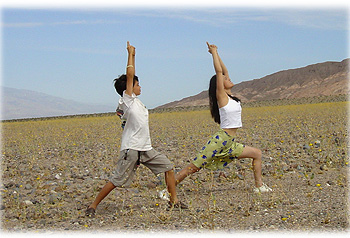
Asanas are special positions of the body that strengthen, purify and balance the endocrine, nervous and circulatory systems. Compared with other kinds of physical exercises, ansans reach deeper into the body and mind and have more pronounced healing properties. When practiced regularly, you will have more pleasant thoughts and fewer negative emotions and your overall mood will improve.
3.
Breathing Exercises Lead to Psychological Well-being
Through scientific techniques, yoga breathing exercises (e.g., Ujjayi,
Dirgha and Nadi Shodhana pranayamas) calm and focus the mind, relax the
body, oxygenate the blood, purge the lungs of residual carbon dioxide,
soothe anxiety and stress, balance left and right hemispheres, and promote
clear thinking. When doing breathing exercises, the yogi must exercise
intense concentration and precise body control, which also contributes
to freeing the mind from mental disturbances, reduction of nervousness,
irritability and confusion, depression and mental fatigue.
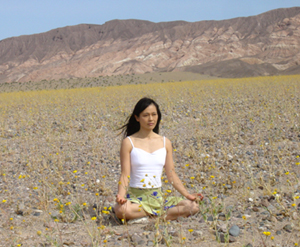
Further more, both yoga postures and breathing exercises generally leave practitioners feel more connected to their body and mind and more aware of their well-being.
4.
Yoga Induces Relaxation
Hatha yoga, especially the restorative kind, integrates physical exercise
and relaxation, which in turn relieves depression, exhaustion, anxiety
and pain. During yoga practice, more than one type of relaxation is induced.
For example,
- Differential Relaxation - some muscles, those that are necessary to maintain the posture, are active while other muscles remain relaxed. It can also be used during many daily activities that do not demand our full muscle support for safety reasons.
- Cue-controlled Relaxation - can be induced very quickly by the practitioner's associating the state of relaxation with a cue or signal, such as a word (e.g. "relax") or a posture (e. g. shavasana).
5.
Yoga Contributes to Peak Psychological Experience
According to renowned humanistic psychologist Abraham Maslow, the following
constitute what he calls the "Peak Experience":
- The whole universe is perceived as an integrated and unified whole.
- The perception is exclusively and fully attended to.
- External objects, the world and individual people are perceived as being detached from human concerns.
- Peak experiences are ego transcending.
- Peak experiences make life worthwhile by their occasional occurrence. They give meaning to life itself.
- There is lack of consciousness of time and space. Sometimes this may even mean disorientation in time and space.
- The concepts - good/bad, become blurred and may even cease to exist. Pain, diseases and death are perceived to be in the rightful scheme of life. This particular peak experience is difficult to explain to non-experiencers.
- The peak experiences leave one with feelings of awe, reverence, humility, compassion and an inner tuning towards truth, integrity and the discriminatory faculties.
- There tends to be a loss of anxiety, guilt, fear, inhibition, confusion, conflict and other negative human features. Instead these are replaced by profound experienced so great that often they are interpreted in the form of religious conversion or spiritual uplifting.
- The real Self is experienced, in which a person is: more real, more creative/spontaneous, more self-determined, a free agent of own destiny, selfless and relatively egoless, more innocent and honest, more subject to higher laws, unambitious in the normal sense.
- Dichotomies are resolved, for example, humility vs. pride or ambition vs. relaxed life.
- A feeling of being the recipient of "Divine Grace".
Yogic teachings share many of the ideological principles and practical lessons in Marslow's theory.